
Cutting back on caffeine
Count what you take, taper it without the misery, get through the headache, and keep the benefit afterwards.
What this guide covers
The Caffeine Break Buddy page explains what caffeine tolerance is and lays out the withdrawal timeline hour by hour. This guide is the practical side: counting what you actually take, building a taper, handling the headache, and coming back to coffee without drifting straight back to where you started.
If you are pregnant, get migraines, or take medication that interacts with caffeine, talk to your clinician before you change your intake.
Count what you actually take
Most people underestimate their intake, mostly because cup sizes and brews vary so much. The US Food and Drug Administration lists a regular 12-ounce brewed coffee at anywhere from 113 to 247 mg. Typical amounts:
| Source | Caffeine |
|---|---|
| Brewed coffee, 8 oz (240 mL) | about 96 mg |
| Brewed coffee, 12 oz (FDA range) | 113 to 247 mg |
| Espresso, one 1 oz shot | about 63 mg |
| Instant coffee, 8 oz | about 62 mg |
| Decaf coffee, 8 oz (FDA) | 2 to 15 mg |
| Black tea, 8 oz | about 48 mg |
| Green tea, 8 oz | about 29 mg |
| Caffeinated soda, 12 oz (FDA range) | 23 to 83 mg |
| Energy drink, 12 oz (FDA range) | 41 to 246 mg |
| Energy shot, 2 oz | about 200 mg |
| Dark chocolate (60 to 69%), 1 oz | about 24 mg |
| Excedrin Migraine or Extra Strength, per caplet | 65 mg |
Figures are Mayo Clinic's unless marked FDA. The chocolate figure is USDA's and the Excedrin figure is from its label.
Two sources are easy to miss. Some over-the-counter headache pills contain caffeine, and the Excedrin label itself warns that its recommended dose contains about as much caffeine as a cup of coffee. Supplements and pre-workout are harder: in a study of 53 caffeine-containing supplements, only 28 listed an amount, and daily doses ranged from 1 to 829 mg. Guarana, yerba mate, kola nut and green tea extract are all caffeine under another name.
Add up a normal day. For reference, the FDA cites 400 mg a day as an amount not generally associated with negative effects for most adults, while noting that people vary widely in how sensitive they are and how fast they clear it.
Build the taper
The standard clinical advice is to cut intake by 25 to 50% every few days, because withdrawal is milder when the step you stop from is smaller. The easiest way to do that without thinking about milligrams is to keep the number of cups the same and change what is in them, one cup at a time. Swapping in decaf usually does not change the taste much, and brewing tea for less time cuts its caffeine.
An example for someone on three 8-ounce mugs of brewed coffee a day, about 290 mg. Each step lasts three or four days:
| Step | The three mugs | About |
|---|---|---|
| Start | Regular, regular, regular | 290 mg |
| 1 | Regular, regular, half-caf | 240 mg |
| 2 | Regular, half-caf, half-caf | 195 mg |
| 3 | Half-caf, half-caf, half-caf | 150 mg |
| 4 | Half-caf, half-caf, decaf | 105 mg |
| 5 | Half-caf, decaf, decaf | 65 mg |
| 6 | Decaf, decaf, decaf | under 45 mg |
The amounts assume about 96 mg for a regular mug, half that for half-caf, and decaf at the FDA's 2 to 15 mg. The whole plan takes two to three weeks. The early steps are smaller than the published 25 to 50% and grow toward it; the last one is a big share of a small amount. If a step gives you a headache, stay on it a few days longer. If you want to go faster, skip every other row. Swap the afternoon cup first, since it is the one most likely to be costing you sleep.
Handling the headache
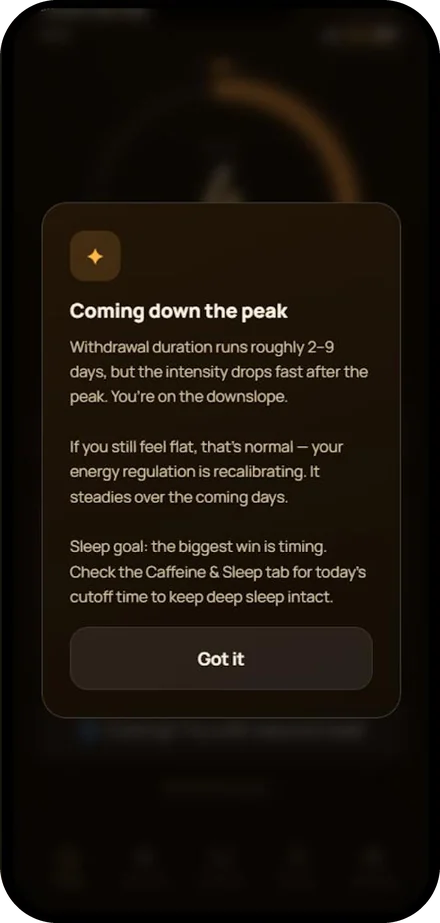
The withdrawal headache has a formal definition, and two parts of it are useful. It is relieved within an hour by about 100 mg of caffeine, and it resolves within seven days of stopping completely. The clinical reference for caffeine withdrawal suggests ordinary painkillers such as acetaminophen, ibuprofen or aspirin, and water and rest, especially over the first one to three days.
Read the painkiller label. A caffeinated tablet quietly puts back the dose you just took out. Using combination painkillers on ten or more days a month for more than three months is also a recognized cause of rebound headaches for people who already get headaches.
A small dose is a legitimate fix. The same clinical reference notes that 50 to 100 mg of caffeine gives rapid relief. If the headache is making the day unworkable, a small cup is not failure. Carry on from a smaller step.
The weekend headache is the same thing. The diagnostic criteria count caffeine that is "interrupted or delayed," not only stopped. Sleeping in and having your first coffee three hours late can set it off, which is why some people only get headaches on Saturdays.
If you get migraines, talk to someone before you start. Caffeine withdrawal is a known migraine trigger, and the app page has the study.
Getting through the afternoon
A short nap, if you can take one. In a sleep-lab comparison, a 10-minute nap improved alertness straight away and the benefit lasted up to about two and a half hours. A 30-minute nap left people groggy first. CDC guidance for shift workers says the same: under 20 minutes, with an alarm.
Move for ten minutes. In a small study of 18 sleep-deprived young women, ten minutes of walking up and down stairs raised their sense of energy more than a 50 mg caffeine capsule did.
Get daylight early. Bright light during the day helps set your body clock and supports sleep at night. Whether it directly makes you more alert in the moment is less certain, so count it as an investment in tonight's sleep.
Keep the ritual. A lot of what a coffee break gives you is the break. Decaf or herbal tea at the same time, in the same mug, keeps that part intact.
Who should check first
Pregnancy. The American College of Obstetricians and Gynecologists says moderate caffeine consumption, under 200 mg a day, does not appear to be a major contributing factor in miscarriage or preterm birth, and that the link with growth restriction remains undetermined. Your own clinician is the one to set a target.
Some medications slow caffeine down. Fluvoxamine, an antidepressant, is a strong example: in one study, caffeine's half-life went from about 5 hours to 31. The antibiotic ciprofloxacin stretched it from about 5 to 8 hours, and oral contraceptives from about 5.4 to 7.9. If you start one of these, the same coffee lasts much longer. Your pharmacist can check anything else you take.
Quitting smoking changes your coffee. Chemicals in tobacco smoke speed up the enzyme that clears caffeine. When you stop, clearance drops by about a third within days. In one study, four days off cigarettes raised the amount of caffeine in the blood over a day by 46%, and levels can stay higher for months. The same coffee hits harder, and the jitters and poor sleep can pass for nicotine withdrawal. New Zealand's medicines regulator suggests halving caffeine when you quit. This comes from the smoke, not the nicotine: it happens when you stop smoking even if you use patches, and quitting a vape or pouches does not cause it. The nicotine guide has more.
Very high doses are dangerous. The FDA says toxic effects such as seizures can occur from rapidly taking around 1,200 mg. Pure powdered caffeine is the real hazard: one teaspoon can hold as much as 28 cups of coffee, and these products have contributed to at least two deaths in the US. Medical experts advise against energy drinks for children and teens.
Going back to coffee
If you go back, the goal is to keep what the break bought you. Tolerance to caffeine's lift comes from taking it every day, and it comes back quickly, so these are worth deciding before the last day:
- A daily ceiling well under where you started. The FDA's 400 mg is an outer limit for most adults, not a target.
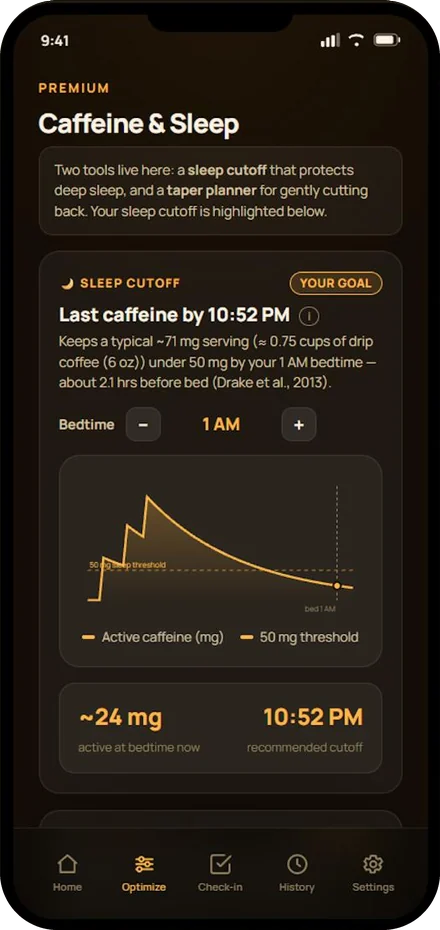
- A cutoff time. Common sleep advice is no caffeine in the six hours before bed. In a sleep-lab study, 400 mg taken six hours before bed still cost more than an hour of sleep.
- Decaf for the second cup when you want the cup and not the caffeine.
- A recount now and then. Redo the tally from step one once a month. Creep happens one bigger cup at a time.
Keep count
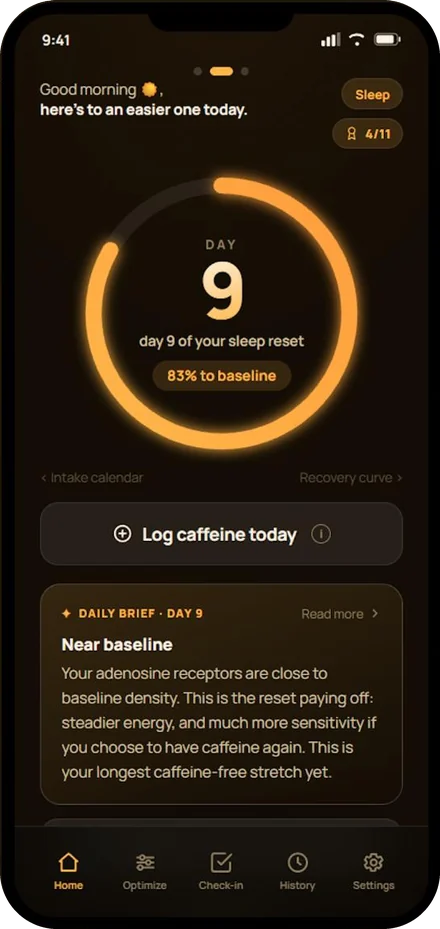
Caffeine Break Buddy is the tracker I built for this. You log coffee, espresso, tea, energy drinks, soda, pre-workout, pills or chocolate, watch it clear your system between doses, and see your tolerance recover. It needs no account, and nothing you enter leaves your phone. It is free on Android: get it here.
Taking a break from something else? There is a guide to cannabis tolerance breaks and one to quitting nicotine.
Sources
- US FDA. Spilling the Beans: How Much Caffeine is Too Much? Link
- Mayo Clinic. Caffeine content for coffee, tea, soda and more. Link
- Mayo Clinic. Caffeine: How much is too much? Link
- USDA National Agricultural Library. Caffeine content of foods (SR Legacy). Link
- Excedrin Migraine, Drug Facts label. DailyMed. Link
- Excedrin Extra Strength caplets, product label. Link
- Andrews KW et al. The caffeine contents of dietary supplements commonly purchased in the US. Analytical and Bioanalytical Chemistry, 2007. Link
- Rocha Cabrero F, Hamilton R. Caffeine Withdrawal. StatPearls, NCBI Bookshelf. Link
- International Headache Society. ICHD-3, 8.3.1 Caffeine-withdrawal headache. Link
- International Headache Society. ICHD-3, 8.2.5 Combination-analgesic-overuse headache. Link
- Brooks A, Lack L. A brief afternoon nap following nocturnal sleep restriction: which nap duration is most recuperative? Sleep, 2006. Link
- CDC NIOSH. Training for nurses on shift work and long work hours, module 7. Link
- Randolph DD, O'Connor PJ. Stair walking is more energizing than low dose caffeine in sleep deprived young women. Physiology & Behavior, 2017. Link
- Lok R et al. Light, alertness, and alerting effects of white light: a literature overview. Journal of Biological Rhythms, 2018.
- Brown TM et al. Recommendations for daytime, evening, and nighttime indoor light exposure. PLOS Biology, 2022. Link
- ACOG Committee Opinion No. 462. Moderate caffeine consumption during pregnancy (reaffirmed 2023). Link
- US FDA. Drug development and drug interactions: examples of drugs that interact with CYP enzymes. Link
- Jeppesen U et al. A fluvoxamine-caffeine interaction study. Pharmacogenetics, 1996. Link
- Healy DP et al. Interaction between oral ciprofloxacin and caffeine in normal volunteers. Antimicrobial Agents and Chemotherapy, 1989. Link
- Abernethy DR, Todd EL. Impairment of caffeine clearance by chronic use of low-dose oestrogen-containing oral contraceptives. European Journal of Clinical Pharmacology, 1985. Link
- Faber MS, Fuhr U. Time response of cytochrome P450 1A2 activity on cessation of heavy smoking. Clinical Pharmacology & Therapeutics, 2004. Link
- Brown CR et al. Changes in rate and pattern of caffeine metabolism after cigarette abstinence. Clinical Pharmacology & Therapeutics, 1988. Link
- Swanson JA, Lee JW, Hopp JW. Caffeine and nicotine: a review of their joint use and possible interactive effects. Addictive Behaviors, 1994.
- Medsafe (New Zealand). Smoking interactions with medicines. Link
- US FDA. Pure and highly concentrated caffeine. Link
- Drake C et al. Caffeine effects on sleep taken 0, 3, or 6 hours before going to bed. Journal of Clinical Sleep Medicine, 2013. Link
- NHS inform. Sleep problems and insomnia self-help guide. Link